

The Kintla coaching approach draws on Dr. Bruce Perry’s Neurosequential Model, emphasizing the importance of emotional regulation.
Stress, as it turns out, is contagious. A stressed coach has a high potential to transfer that tension to the person they’re coaching. That’s why we always encourage a quick self-check at the start of coaching interactions. “Am I stressed right now?” If the answer is yes, take a moment to regulate yourself or consider finding a later time where you will show up more regulated. If you proceed while super stressed, you might create additional challenges that you’ll have to clean up later.
Next, check in with your coachee. Simply ask something like “What’s on your mind today?” at the start of your conversation. This will help gauge their emotional state. This is especially true in virtual meetings where a smiling face can mask underlying stress. This quick check-in provides essential context for a helpful and productive session.
Practical Tips for Regulation
There are many effective ways to regulate stress. We find it useful to organize them into three categories:
1. Bottom-up regulation
Simple physical actions that quickly calm your nervous system, such as deep breathing, taking a short walk, or even conducting a walking meeting (virtually or in person).
2. Top-down regulation
This focuses on reframing how you mentally approach stressful situations. Pay attention to your internal dialogue. Are you catastrophizing or using negative self-talk? Try shifting language from words like “disaster” to “challenge” or “opportunity.” Avoid extremes like “always” or “never,” and instead describe situations objectively. Anticipate predictable stressors in your schedule and build pre-plans for these moments. Build short, intentional breaks into your day to reset your mindset and stay focused on what’s within your control.
3. Relational regulation
Quick, meaningful interactions can rapidly reduce stress for both you and your coachee. Prompts like “What’s going well today?” or sharing positive moments can instantly boost mood and foster connection.
The Regulation Curve
The Regulation Curve illustrates the interaction between stress and performance. Contrary to what you might think, some stress is beneficial. It helps us focus and perform at our best, which we call the “Green Zone.” Too little stress leaves us bored or disengaged, while too much stress pushes us into the “Red Zone” where anxiety negatively impacts performance.
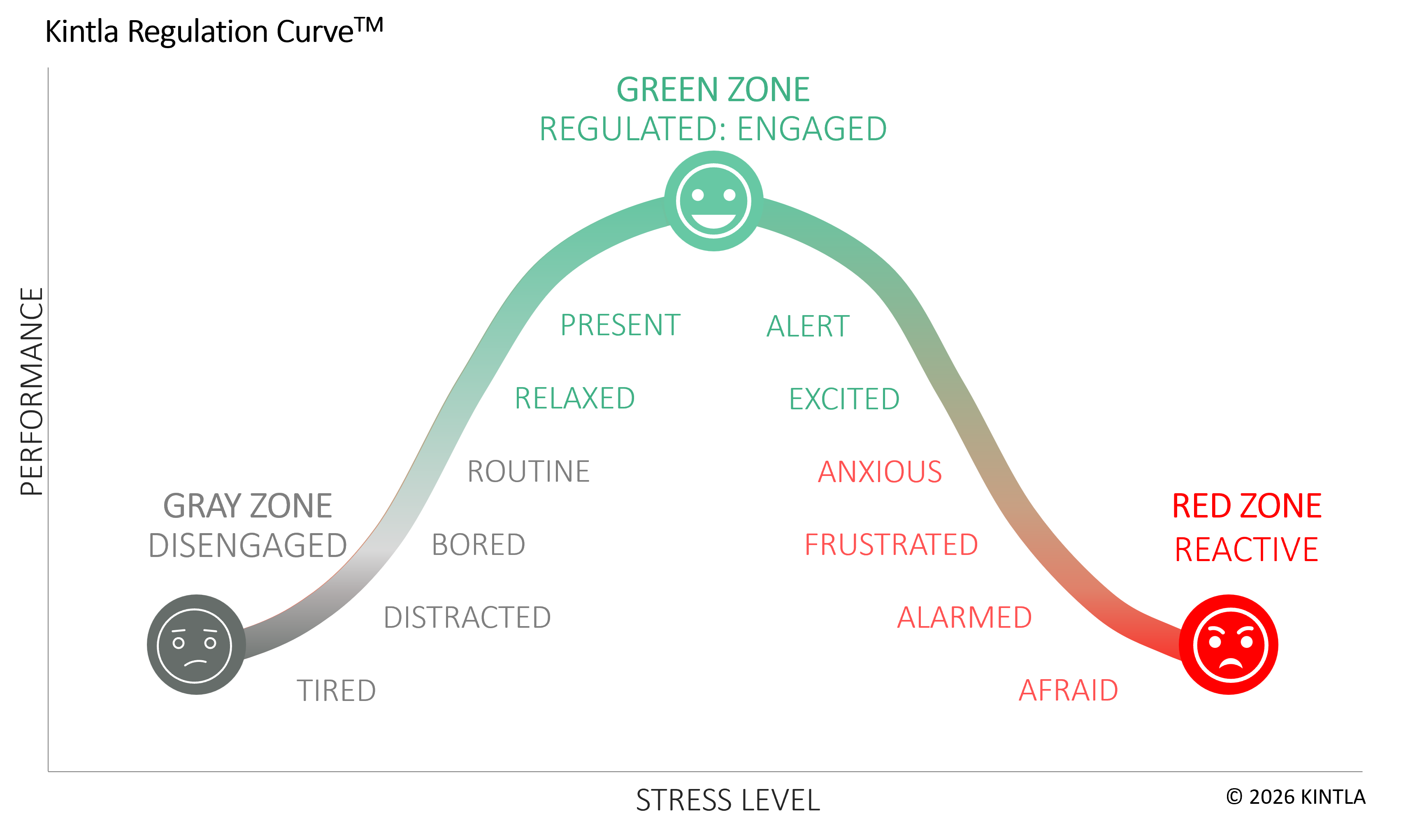
Use this curve as a simple tool for self-assessment: “Where am I on this curve right now?” Encourage your team to do the same. This approach provides clear, shared language to discuss stress openly and constructively.
Applying Regulation to Coaching
In coaching, regulation means first ensuring you’re operating from the Green Zone. If you find yourself or your coachee slipping into the Red Zone, pause and use one of the regulation techniques above before proceeding. By consistently practicing these small adjustments, you create a calmer, more productive coaching environment. It also helps increase the chances your key takeaways are heard during your coaching conversations.
Share Your Experience
Regulation doesn’t have to take long to be effective. What’s your go-to strategy for quickly regulating yourself or helping others return to a calm, focused state?